

Boku Casinos 2026

In the modern online payments industry, convenience and transaction speed take center stage. Users no longer want to enter long bank card details, memorize complex passwords, or go through multi-stage verification processes every time they need to make a small payment. It is precisely around this idea that the international payment platform Boku was built. This fintech company offers a fundamentally different approach to money transfers, emphasizing the use of your mobile phone and local payment methods.
Originally, the service was created as a solution for direct mobile commerce, also known as Direct Carrier Billing. The core concept behind this technology is extremely simple: all your online purchases are either deducted from your prepaid SIM card balance or added to your monthly mobile phone bill. You do not need to open a bank account or issue a plastic card to pay for digital content, gaming subscriptions, or services.
Over time, the platform transformed into a global payment network. Today, it combines not only carrier billing, but also hundreds of local e-wallets and direct bank transfer systems across the globe. The platform operates in more than eighty countries and partners with major global brands, including Spotify, Microsoft, Netflix, and Meta.
The main advantage of the service lies in the minimal friction required to complete a transaction. A mobile phone is almost always at hand, and payment confirmation takes just seconds via a short SMS code. This makes the system an ideal choice for fast and secure online purchases.
Best Boku online casinos 2026
Choosing a quality gambling website that supports mobile payments requires attention to detail. When users look for convenient ways to top up their balance, the availability of mobile billing becomes a major advantage. Top online venues actively implement these solutions to give players the opportunity to jump straight into gaming without unnecessary formalities.
When selecting a suitable casino, you should focus on several key criteria:
- availability of an official license from recognized international regulators,
- transparent deposit conditions and no hidden fees,
- high level of protection for users' personal and payment data,
- prompt round-the-clock customer support service,
- wide selection of alternative methods for subsequent withdrawal of winnings.
Reliable online casinos create maximum comfort for mobile gaming enthusiasts. The ability to deposit funds using your smartphone eliminates the need to share sensitive banking information. This is particularly appreciated by players who prefer to keep their financial transactions private.
Furthermore, trusted platforms always set clear and transparent transaction limits. Since mobile payments are inherently designed for smaller amounts, quality platforms seamlessly integrate them into their cashier systems, offering users a comfortable balance between security and speed.
Log in and register with Boku
One of the main differences between this platform and traditional e-wallets or payment systems is the absence of a standard registration process. Users do not need to create a personal account on the official website, create passwords, upload passport scans, or wait for account approval from a security team.
Your personal identifier and financial account within the system are your own mobile phone number. Activation happens automatically at the moment you make your first payment:
- select the corresponding payment method on the merchant's website or in the service cashier,
- enter your active mobile phone number in the dedicated window,
- receive a text message on that number containing a one-time confirmation code,
- enter the received code into the payment form to complete the operation.
This approach completely eliminates standard identity verification procedures on the payment service side. All necessary customer identification procedures have already been completed by your mobile operator when you signed your mobile contract.
However, it is important to consider certain technical requirements to ensure smooth use. Your mobile number must be active and associated with a telecom operator that officially partners with the platform in your region. Contract users must have third-party mobile billing enabled, while prepaid plan owners must have sufficient balance to cover the purchase and any applicable fees.
Accessing the system to track expenses happens through your personal dashboard with your mobile operator. It is right there, in your statement or mobile transaction history, that all completed charges are displayed. This saves you from having to monitor another third-party account and remember additional credentials.
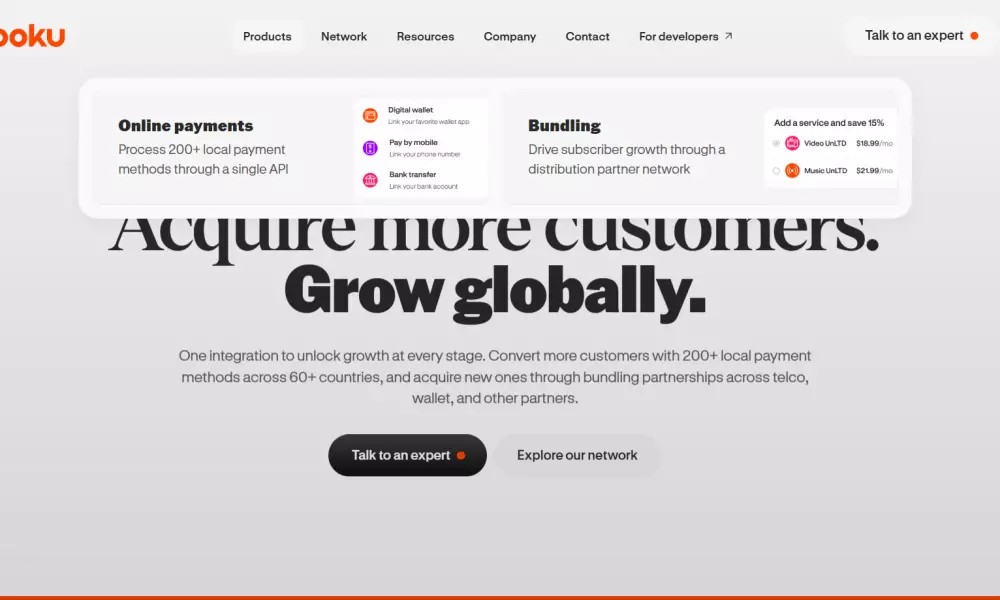
Boku Wallet
In the traditional sense, this payment platform does not have a separate virtual wallet for storing electronic money. The platform's developers chose to integrate with users' existing financial tools, eliminating the need to create and top up another intermediate balance.
The role of your virtual wallet is either your mobile phone balance or the spending limit on your current mobile contract. This creates a unique dynamic in financial interactions.
- You do not need to pre-transfer money to third-party platforms.
- You do not pay fees for storing funds or servicing a virtual account.
- All financial transactions take place within the single window of your mobile operator.
- Access to funds remains available for as long as your phone number is active.
In addition to direct carrier billing, the platform's global network can interact with regional e-wallets and instant payment systems. In various countries, the service acts as a bridge between the merchant and popular local payment apps.
The absence of a physical or electronic wallet within the system itself greatly simplifies the user's life. You do not have to worry about money getting stuck in an intermediate account or forgetting your login details. All transactions are linked to your SIM card, and expense management takes place through your operator's familiar tools.
Reliability and security
Security is a top priority for any online financial transaction. In this regard, the platform offers one of the most reliable security mechanisms on the market, built on the complete exclusion of bank data transfers to third parties.
Transaction security is ensured through a comprehensive set of protective measures:
- no need to enter credit card numbers or CVC codes,
- two-factor authentication via one-time SMS codes for every payment,
- use of secure and tokenized communication channels with telecom operators,
- no storage of personal financial data on third-party servers.
Even if an intruder learns your phone number, they will not be able to complete a payment without physical access to your device, where the SMS confirmation code is sent. This reduces the risk of unauthorized breaches or stolen funds to a minimum.
An additional layer of protection comes in the form of strict transaction limits. Because the system is tailored for microtransactions, strict caps on maximum single transaction sizes and daily spending limits are set at both the operator level and within the platform itself. In the event of a lost or stolen phone, malicious actors simply cannot charge large sums of money.
The company strictly complies with international data security standards and the regulatory requirements of the countries where it operates. Holding official licenses from financial regulators and partnering with major telecom giants confirm the service's high reliability.
Customer service
Customer support in this system has its own specifics due to the platform's architecture. Because the service acts as a connecting bridge between the merchant and the mobile operator, client requests are handled on multiple levels.
To resolve arising questions, users can utilize the following channels:
- a dedicated help section on the company's official website,
- a contact form to resolve technical issues with payment processing,
- your mobile operator's support service regarding billing charges,
- the customer department of the merchant or service where the purchase was made.
A detailed knowledge base is available on the platform's official resource, outlining the most common reasons for declined payments. These may include exceeding limits, operator-side restrictions, or network connection failures.
If the issue concerns mobile balance charges or statement errors, contacting your mobile operator's support team is the most effective way to resolve it. Operators have direct access to your account details and can quickly verify the status of a specific transaction.
The platform's information support works smoothly and efficiently, helping clients quickly understand the details of completed transactions. Having comprehensive guides on the site allows users to resolve most standard queries without waiting for an operator's response.
Many familiar payment services eventually begin issuing their own plastic or virtual bank cards. With this platform, the concept is different: the company deliberately refrains from issuing its own physical or virtual cards.
The service's strategy aims to move away from traditional card infrastructure rather than create another copy of it. The reasons for the lack of cards in the system are simple.
- The primary goal of the platform is to simplify payment down to a single click using a phone number.
- Issuing and maintaining cards incur additional expenses and commissions.
- Using a mobile account eliminates the need to carry plastic around.
- Virtual cards require creating a personal account, which runs counter to the concept of fast payments.
Instead of issuing its own cards, the platform integrates modern tokenization and direct transfer technologies. This allows payments to be processed directly between the subscriber's account and the merchant, bypassing international card payment systems and acquiring fees.
For users, this means no hidden fees for card issuance, reissuance, or annual maintenance. You do not need to keep track of card expiration dates or worry about physical loss. Your financial options are limited only by your mobile balance or the limit established by your operator.
Boku in casinos Popular?
Mobile payments have earned strong popularity among online entertainment enthusiasts due to their simplicity and privacy. The ability to quickly top up a gaming balance directly from a smartphone screen, without needing a bank card, attracts a large user base.
High demand for this payment method in gaming is driven by several factors:
- instant deposit crediting within seconds,
- high degree of privacy, as bank statements do not contain gaming transaction data,
- built-in expense control thanks to strict daily payment limits,
- complete accessibility for smartphone owners without bank cards.
Players often use this method for quick gaming sessions or to explore new gaming sites. Established maximum payment limits serve as a natural barrier, helping players adhere to responsible gaming principles and avoid overspending.
Gambling operators actively integrate this tool into their cashiers because it delivers exceptionally high payment conversion rates. Not having to go through complex card details forms reduces the drop-off rate at the payment stage.
The method's popularity continues to grow in regions with high mobile penetration rates and a developed digital services market. For many players, this approach has become the primary alternative to classic bank transfers.
How to Deposit in Boku Casinos?
The process of topping up a casino account via mobile payment is remarkably straightforward and takes no more than a couple of minutes. All you need is your mobile phone with an active SIM card and a positive balance. Overall, everything is very simple for any moderately experienced user.
To make a successful deposit, perform the following steps.
- Log in to your chosen gaming site and navigate to the cashier section.
- Select the deposit tab and find the mobile payment option among the available methods.
- Specify the deposit amount while keeping system limits in mind.
- Enter your mobile phone number in international format.
- Wait for an SMS message containing a unique transaction confirmation code.
- Send a reply SMS or enter the code into the dedicated field on the cashier page.
- Receive a notification confirming the successful charge and balance update.
Funds arrive in the gaming account instantly, allowing you to start playing right away. The charged amount will either be reflected on your mobile balance or added to your monthly phone bill.
Before making a transaction, ensure you have sufficient funds in your mobile account and that your operator has not imposed restrictions on content services or microtransactions. You should also consider potential operator fees for conducting such transactions.
How to Withdraw Funds from Boku Casinos?
When planning gaming sessions and managing finances, understanding the technical limitations of your chosen payment tools is crucial. With this system, there is a key feature every player should be aware of.
Direct carrier billing technology works in only one direction. This means it is impossible to withdraw casino winnings back to a mobile phone balance using this system.
The reasons for this limitation stem from several factors:
- cellular network architecture is not designed to receive mass incoming commercial transfers,
- financial regulations in most countries prohibit using mobile accounts to withdraw cash,
- mobile operator security policies aim to prevent money laundering,
- the platform's technical specs focus solely on acquiring and collecting payments.
When it comes time to cash out your winnings, you will need to choose an alternative payout method in the casino cashier.
Online platforms typically offer standard bank cards, e-wallets, or direct bank transfers for withdrawals.
To successfully process a payout, the casino may ask you to complete a standard identity verification process and confirm ownership of the account details used for the withdrawal. This is standard practice to ensure the safety of your funds.
Alternative payment methods
Conclusion
The Boku platform is a modern, high-tech, and incredibly convenient tool for making quick online payments. By moving away from complex card infrastructures and bulky e-wallets, the service places its bet on something everyone has on hand: the mobile phone.
The main advantages of the system remain lightning-fast transaction speeds, top-level privacy, and ease of use.
You do not need to memorize logins, complete lengthy registrations, or risk exposing bank account details online. Every operation is protected by a direct channel with the telecom operator and confirmed via a one-time code.
Natural limitations such as modest transaction limits and the lack of a withdrawal feature are offset by reliability and ideal suitability for microtransactions. It is an excellent choice for users who value their time, prefer to keep entertainment spending under control, and make small purchases online. The platform continues to actively develop, expanding its partner network and unlocking new mobile commerce opportunities worldwide.
Frequently asked questions
The Boku system allows you to make deposits using your mobile phone balance or by adding the service cost to your monthly operator bill. You select this method at the cashier, enter your phone number, and confirm the charge using a one-time code from an SMS message without using bank cards.
Using Boku does not require creating a personal account or completing registration on the service website. Your identifier is your mobile phone number, and all transactions are automatically linked to your account with your mobile operator.
The maximum transaction amount through Boku is restricted by limits set by telecom operators and the system itself. Typically, the single transaction limit is a small amount, around $30 or the equivalent in local currency, designed to protect users from unauthorized charges.
The Boku payment service generally does not charge direct fees to buyers, but fees may be established by specific mobile operators or merchants. The total amount to be charged, including any fees, is always displayed in the SMS confirmation message before you confirm the payment.
Withdrawing money from a casino to a Boku account is impossible because the system operates strictly one way for receiving payments. To collect your winnings, you must select an alternative payout method in the casino cashier, such as a bank card or e-wallet.
If a transaction via Boku is declined, check your mobile balance, make sure your operator has no restrictions on content services, and verify that you have not exceeded your daily payment limit. If issues persist, you should contact your mobile operator's support service.
Using Boku is completely safe because you do not enter bank card or account details on third-party sites. All payments are confirmed through your physical phone using one-time codes, and your personal information remains protected by your mobile operator.
- Instant crediting of funds to your account
- No need to complete registration
- High level of security
- Convenient payment confirmation via SMS code
- Complete lack of withdrawal capabilities
- Low maximum transaction limits

To leave a comment, you must log in:


| Info | |
| Website | www.boku.com |
-
5.5
-
6.6
-
6.6
-
4
-
5.6
-
7.8
-
6.6
-
6.3
-
6.3
-
6.1